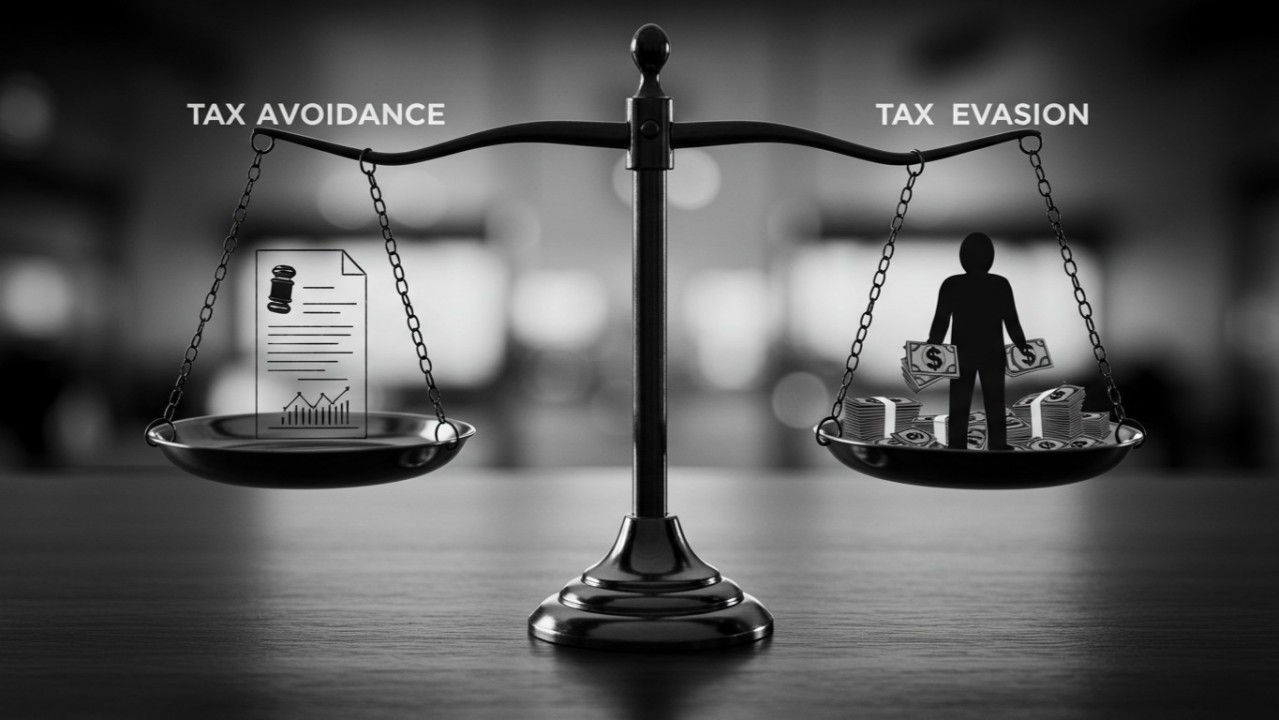
Tax avoidance and tax evasion have traditionally occupied opposite ends of the tax spectrum. Tax avoidance involves arranging one’s affairs within the law to minimise tax liability, while tax evasion involves deliberately breaking the law; for example, by concealing income, hiding bank accounts or falsifying records. One is legitimate tax planning; the other is a criminal offence.
The Finance Act, 2026, however, raises an important question: does Kenyan law still draw a clear distinction between the two?
The recently introduced Section 18A of the Tax Procedures Act now empowers the Commissioner to disregard an arrangement considered to be a tax avoidance scheme and assess the taxpayer as though the arrangement had never existed. The provision applies where a transaction is found to have been undertaken primarily to obtain a tax benefit, whether by reducing tax, deferring tax or obtaining a refund.
There is little doubt that KRA needs effective tools to challenge artificial arrangements designed solely to avoid tax. The concern, however, lies in how broadly the provision has been drafted.
The Act adopts a wide definition of both a “scheme” and a “tax benefit”, giving the Commissioner considerable discretion to determine whether a taxpayer’s arrangements should be disregarded. As a result, transactions that are entirely lawful; but also tax-efficient, could find themselves under scrutiny.
Are the Enacted Procedural Safeguards Enough?
That uncertainty matters. Businesses make commercial decisions every day that have tax consequences. Whether it is choosing between debt and equity financing, deciding where to establish a holding company or selecting an investment vehicle, tax considerations inevitably form part of the decision-making process. Seeking to manage a tax burden efficiently should not, without more, be equated with tax avoidance.
To its credit, the Finance Act, 2026 introduces important safeguards. The Commissioner must now provide written reasons for any determination within 30 days, enhancing transparency and accountability. Taxpayers may also seek private rulings before implementing complex transactions, giving them greater certainty.
These changes are welcome, but they do not resolve the central issue. Procedural safeguards are no substitute for clear legislation. Taxpayers should not be left to infer what the law prohibits from broadly drafted provisions.
The distinction between tax avoidance and tax evasion is too important to blur. Tax evasion deserves firm enforcement because it involves breaking the law. Tax avoidance, on the other hand, should only be challenged where an arrangement is abusive and intended to frustrate the purpose of the legislation: not merely because it produces a lower tax liability.
The Way Forward
As Parliament continues to strengthen Kenya’s anti-avoidance framework, it should ensure that the law remains clear, predictable and proportionate. Businesses should be able to structure their affairs with confidence, knowing that legitimate commercial decisions will not later be recharacterized as abusive tax avoidance simply because they are tax-efficient. Certainty in tax law is not a concession to taxpayers; it is a cornerstone of a fair and effective tax system.
If you require further information or clarification on this matter, please do not hesitate to contact CMC Advocates LLP.